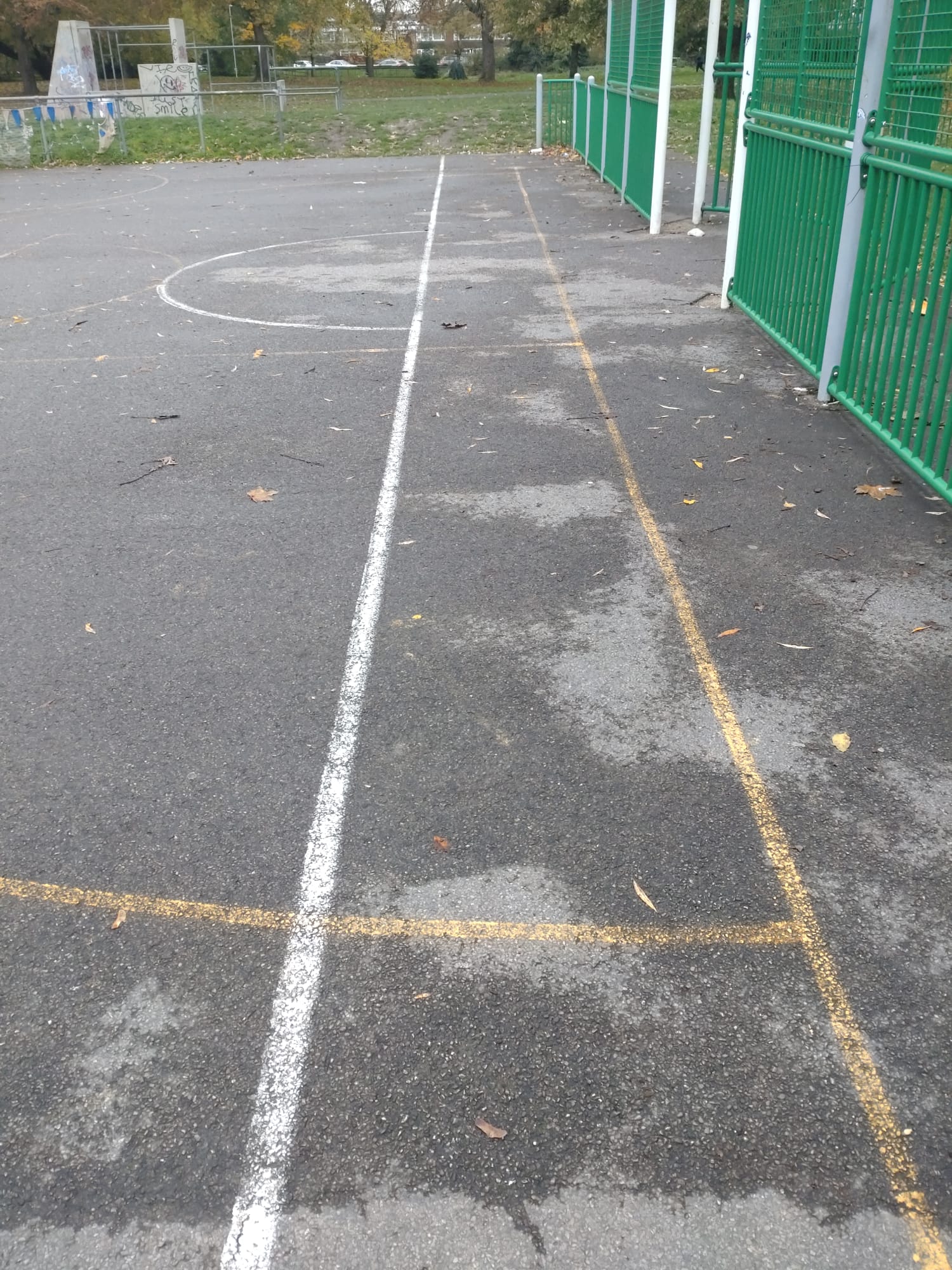
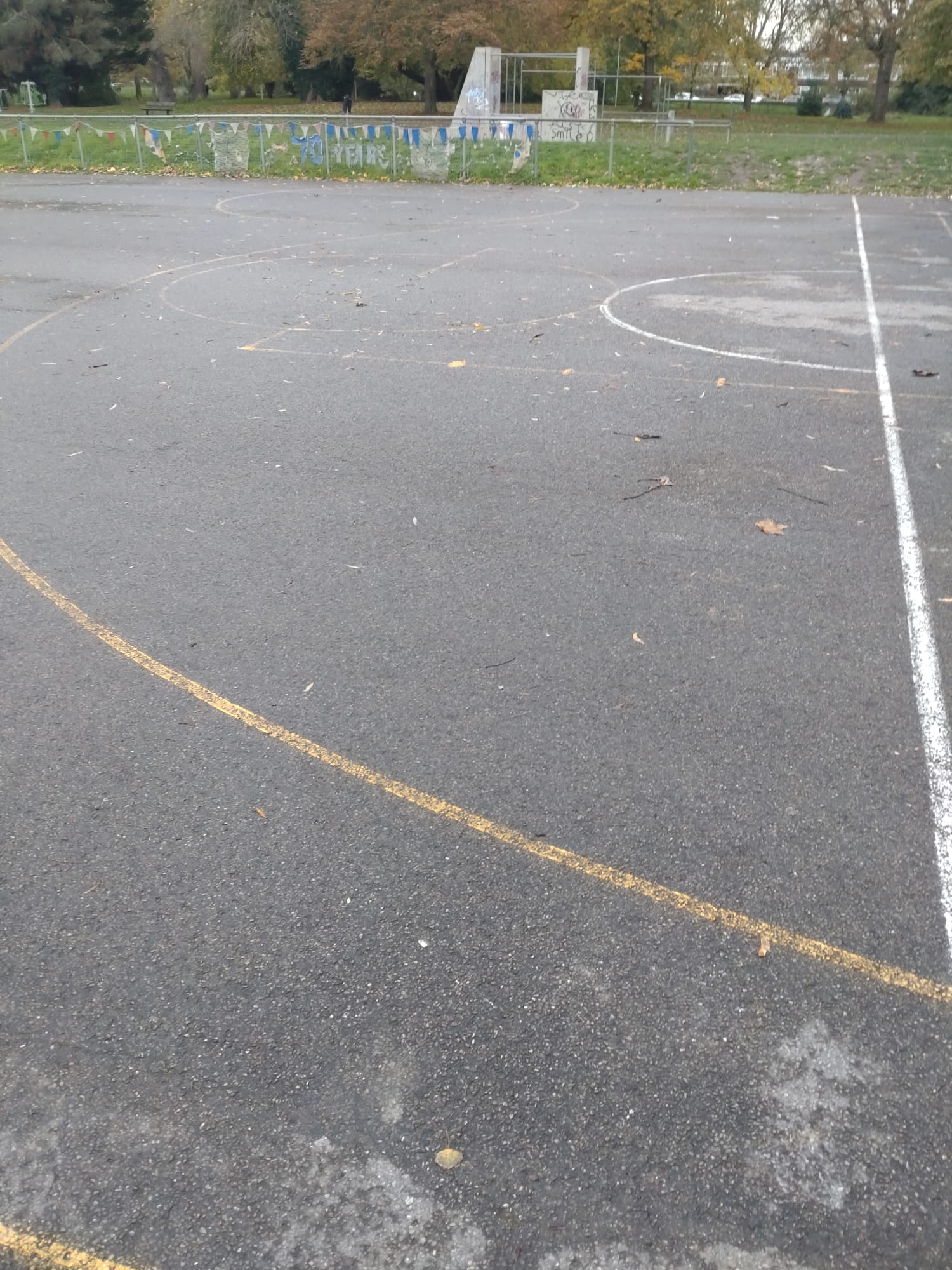
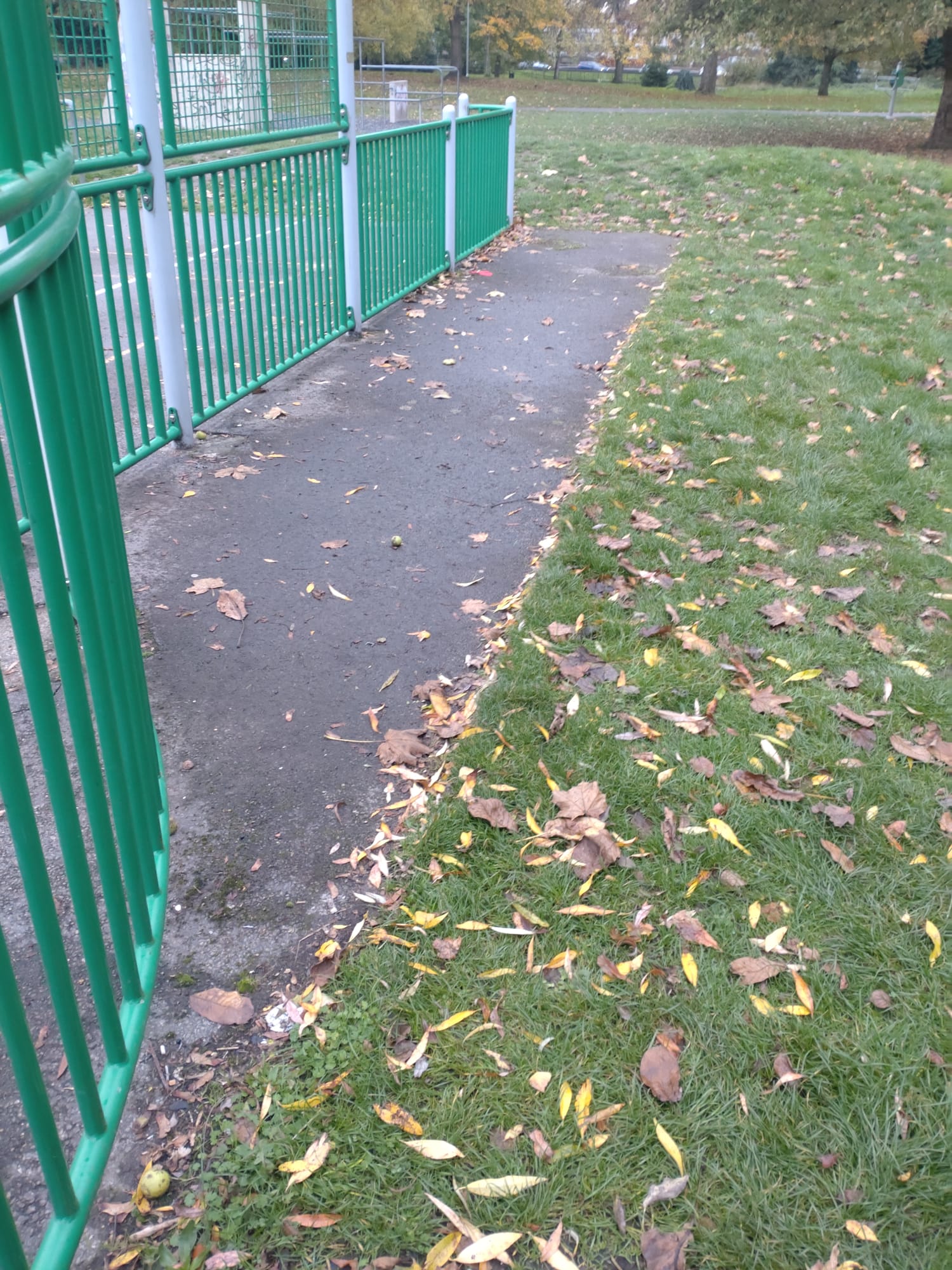
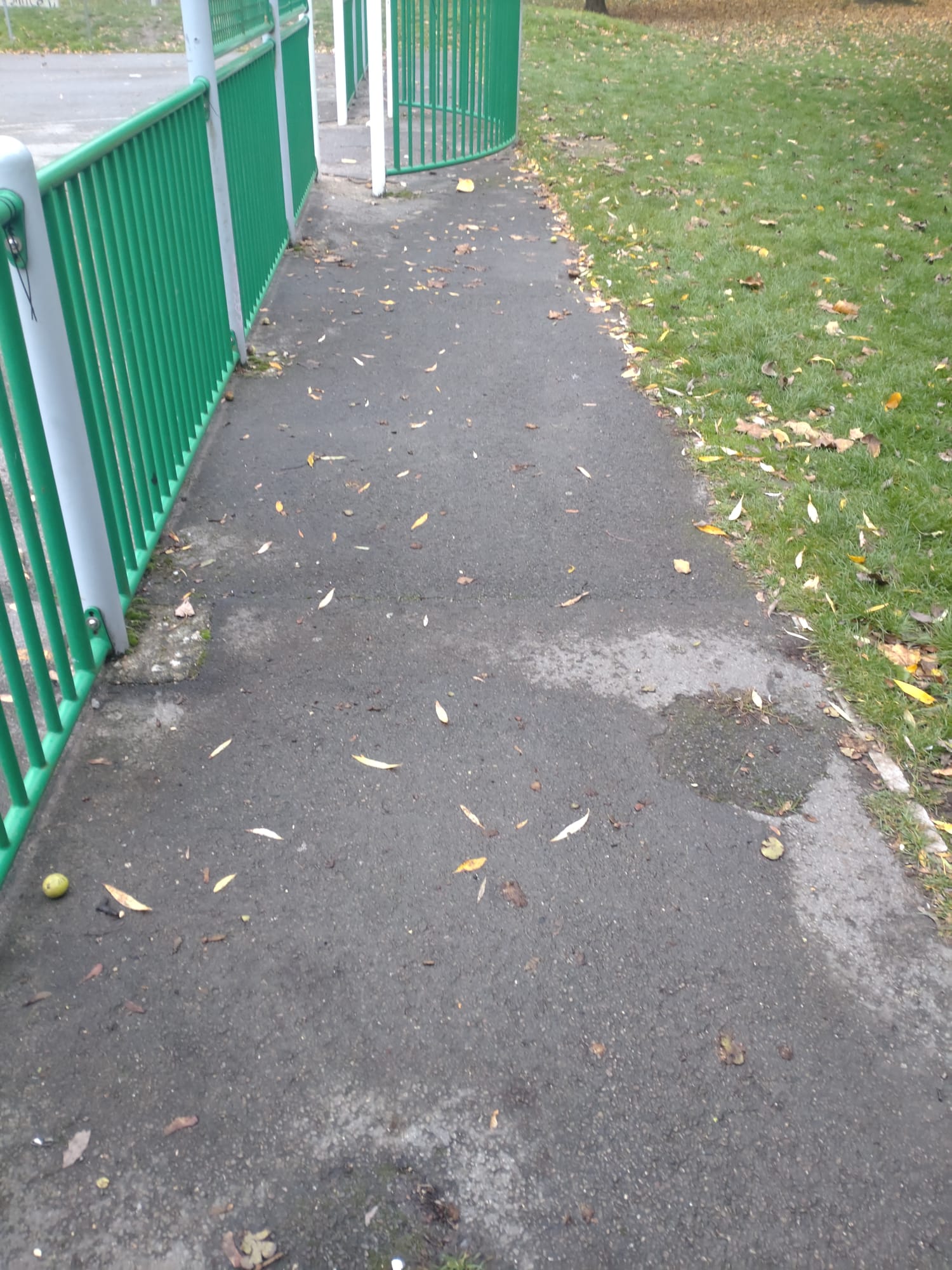
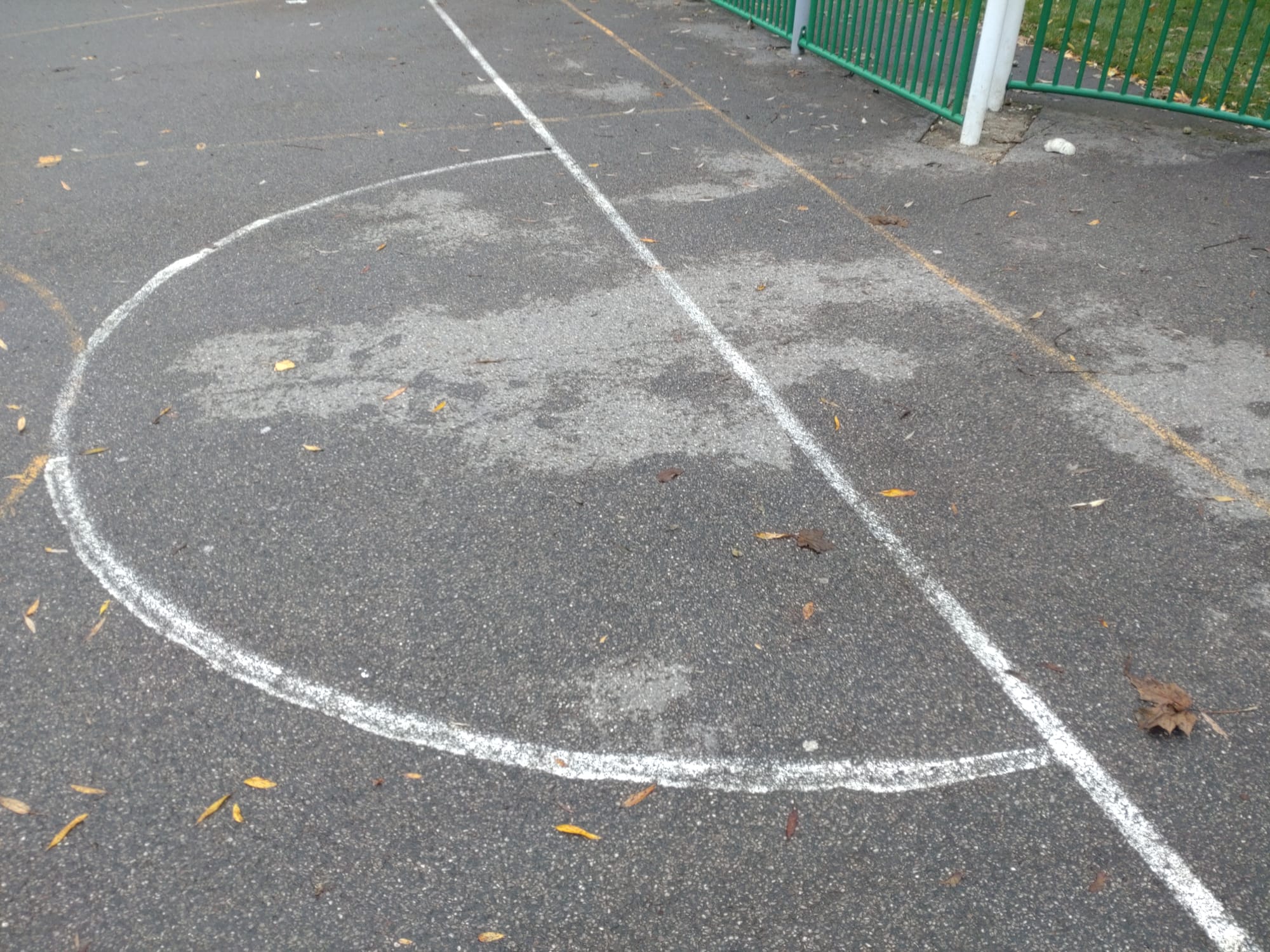
Basketball Court – South Side (Summer)
The south side in summer still contains visible dirt and remains slippery from past flooding.
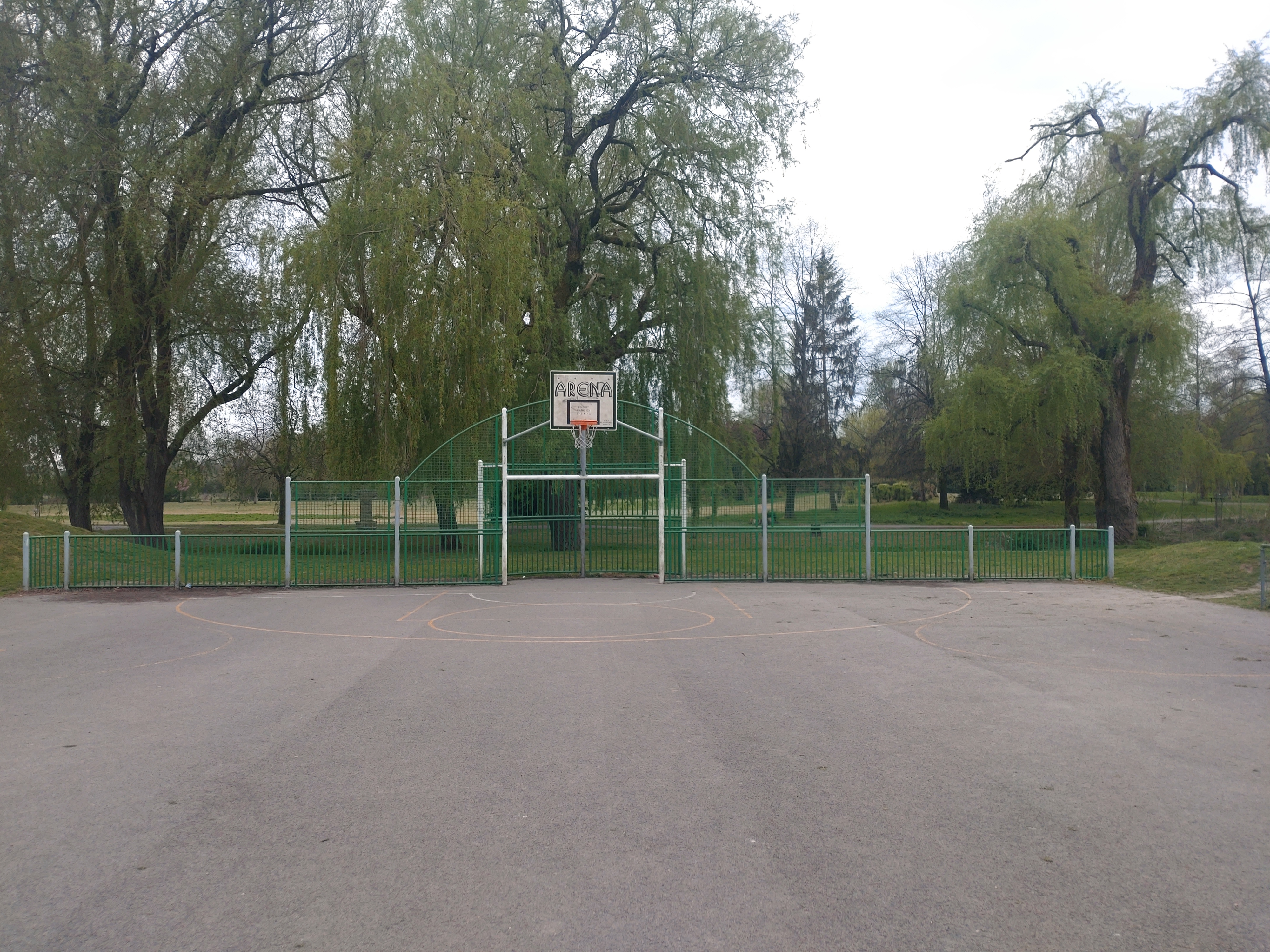
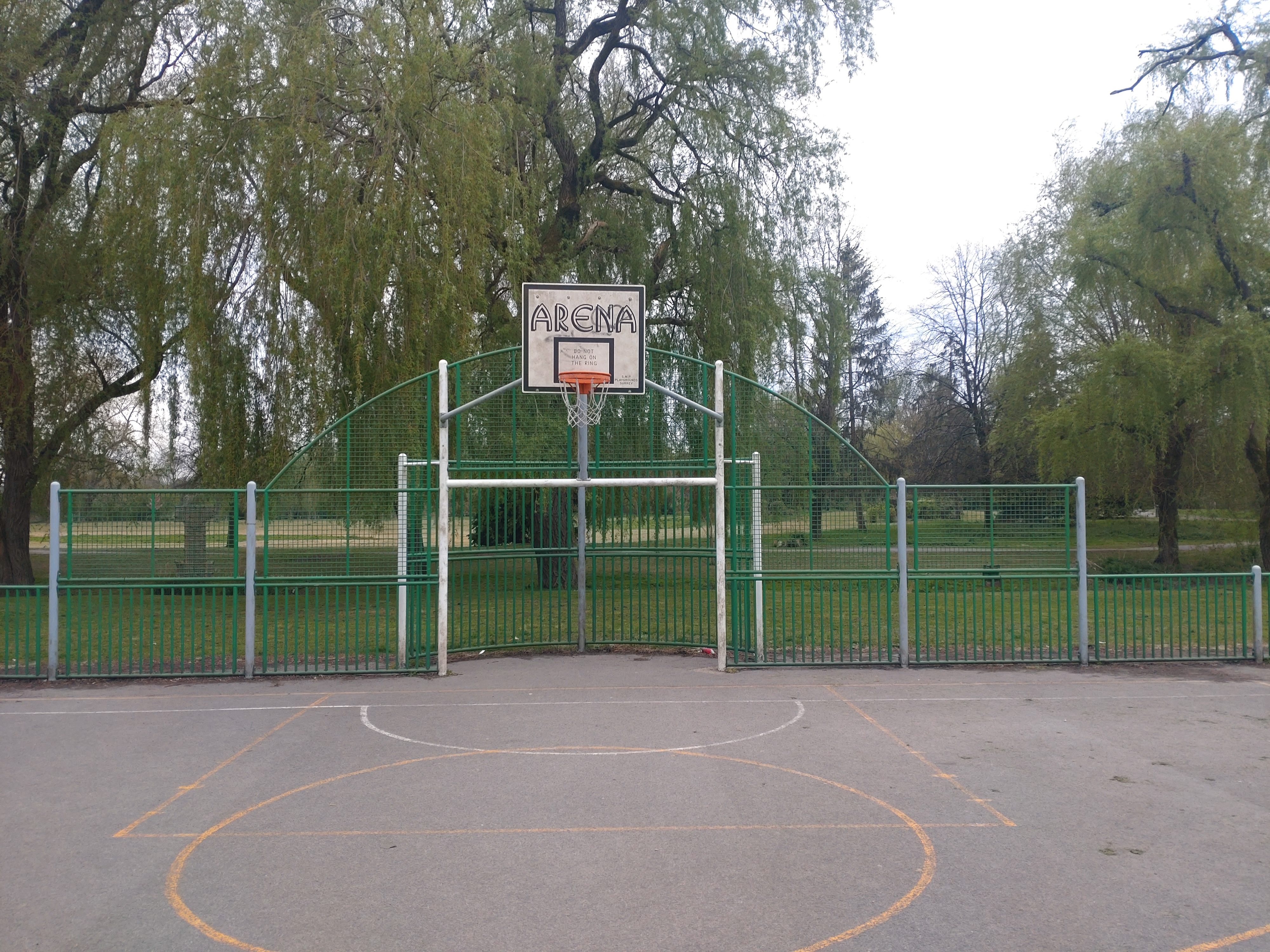

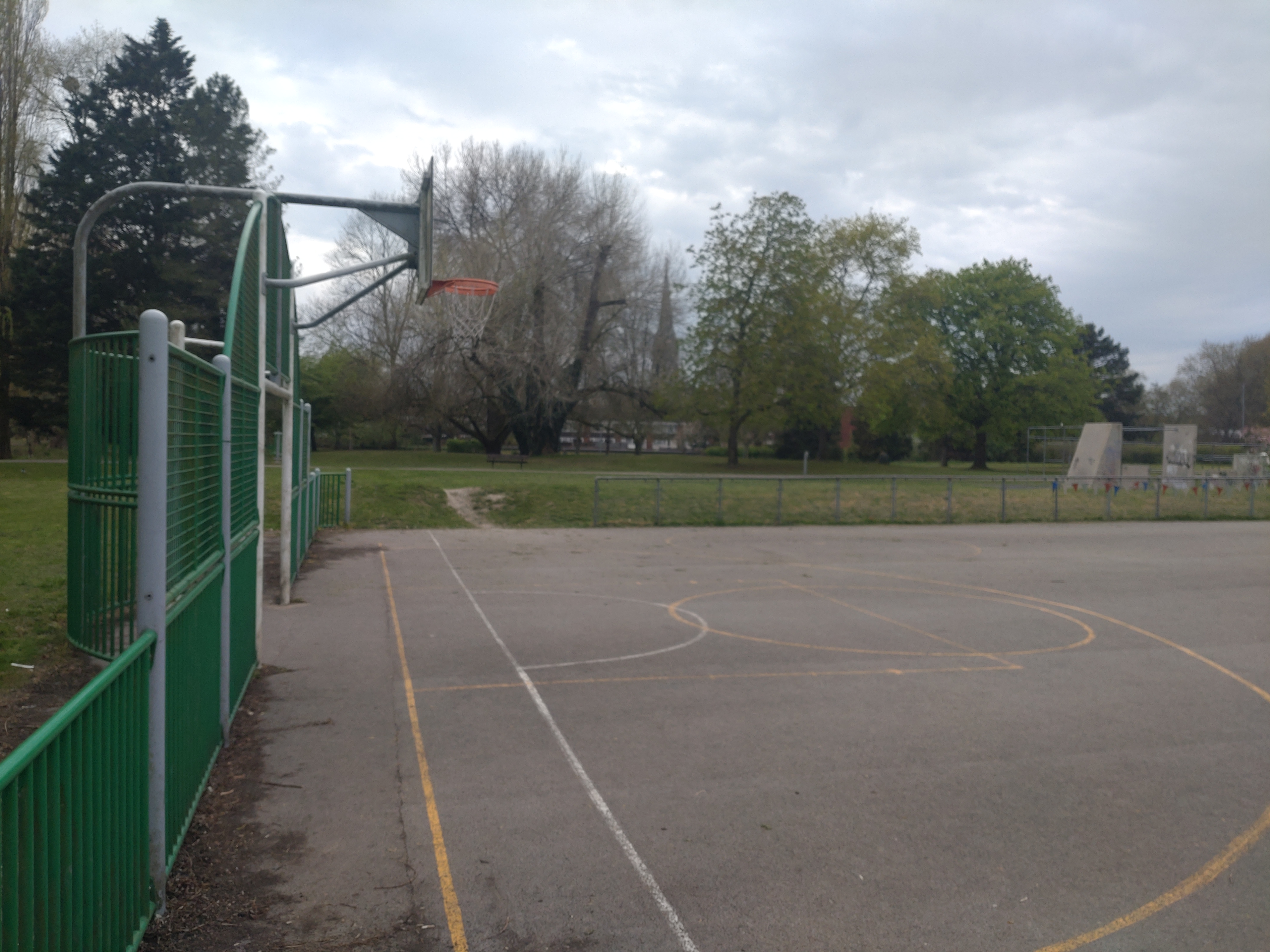

Basketball Court Renovation Proposal
Churchill Gardens is located just over a mile south of Salisbury City Centre and is within walking distance of shops, the Cathedral, and Wiltshire College Salisbury Campus. Framed to the south and east by the River Avon, Churchill Gardens is home to a wide variety of shrubs and trees, adding considerable colour and texture to the landscape and providing a fantastic area near the city to go and relax.
Churchill Gardens also offers numerous outdoor opportunities. Several outdoor gym equipment are free for everyone, and various running routes around the Gardens have been designed and measured. The Parkour Course, a £50,000 facility, was developed in partnership by Salisbury City Council and Wiltshire Council. It provides the community with an excellent opportunity to get outdoors, stay active, and improve their health in a fun, energetic, and social way.
There is also a free skate park and an outdoor sports area with football goals and basketball hoops.
There are a number of issues affecting safe and full use of the court:
The proposed renovation includes:
The south side in summer still contains visible dirt and remains slippery from past flooding.
The north side is currently the most used part of the court and experiences increased wear and tear.
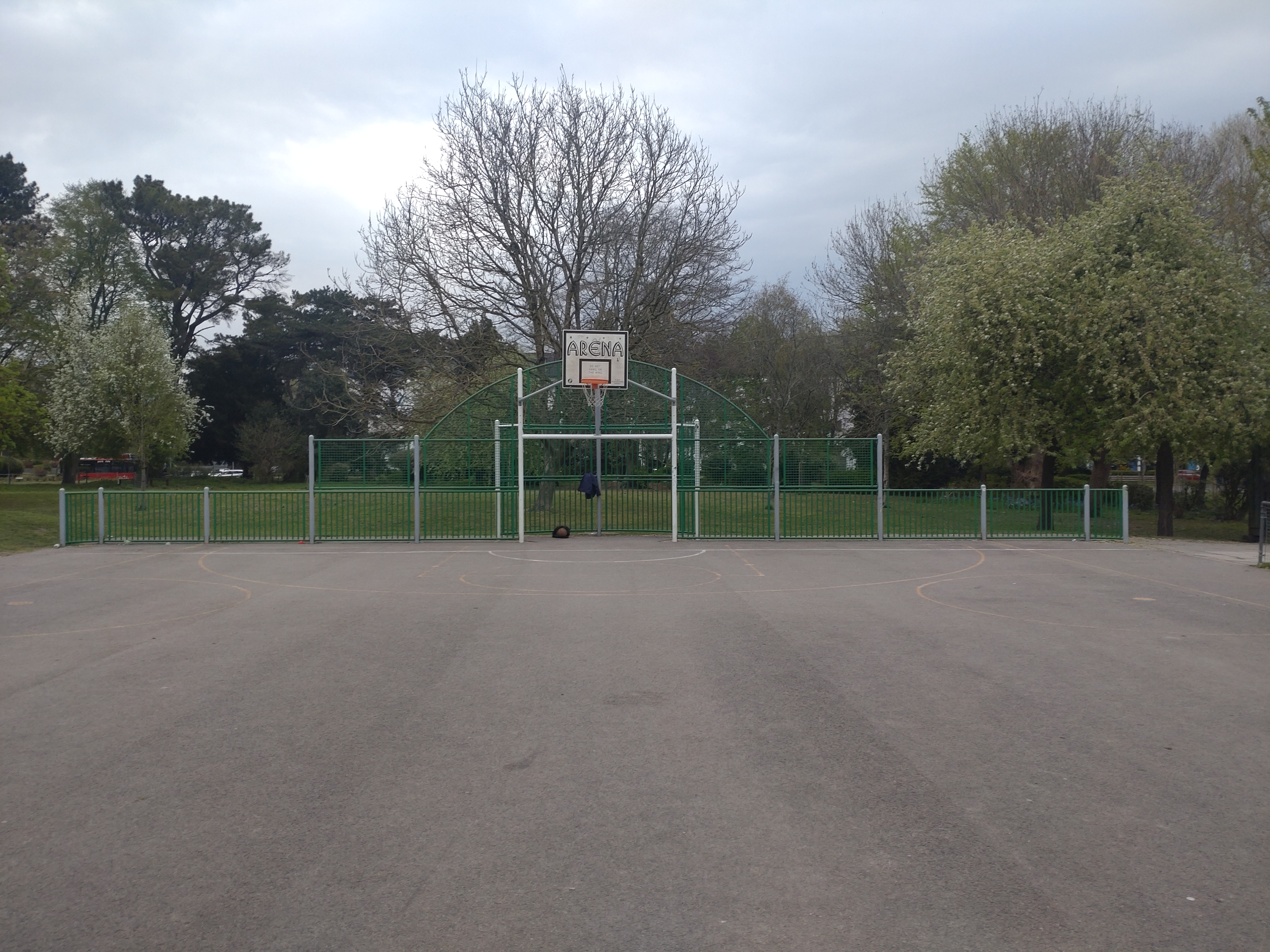
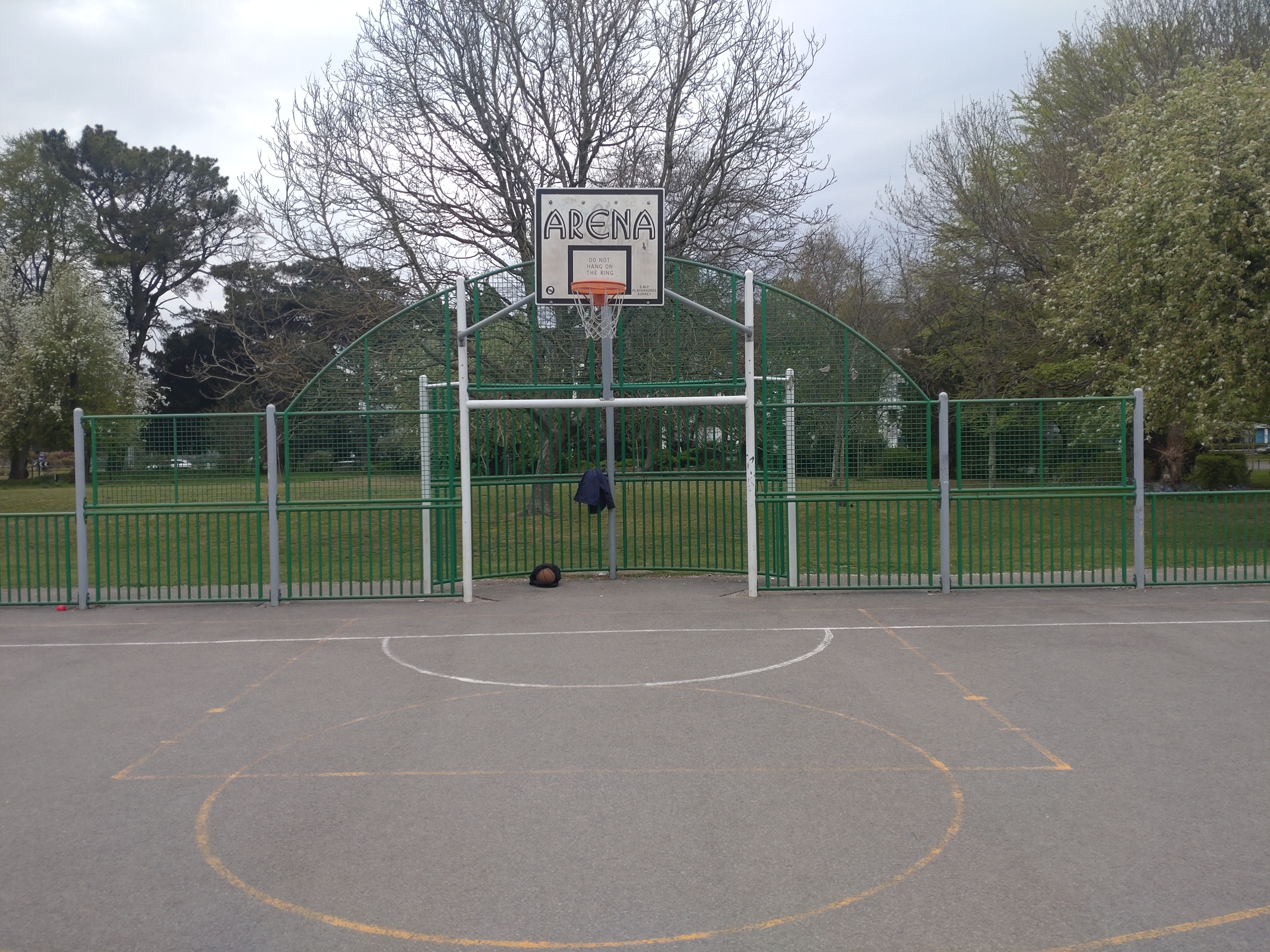
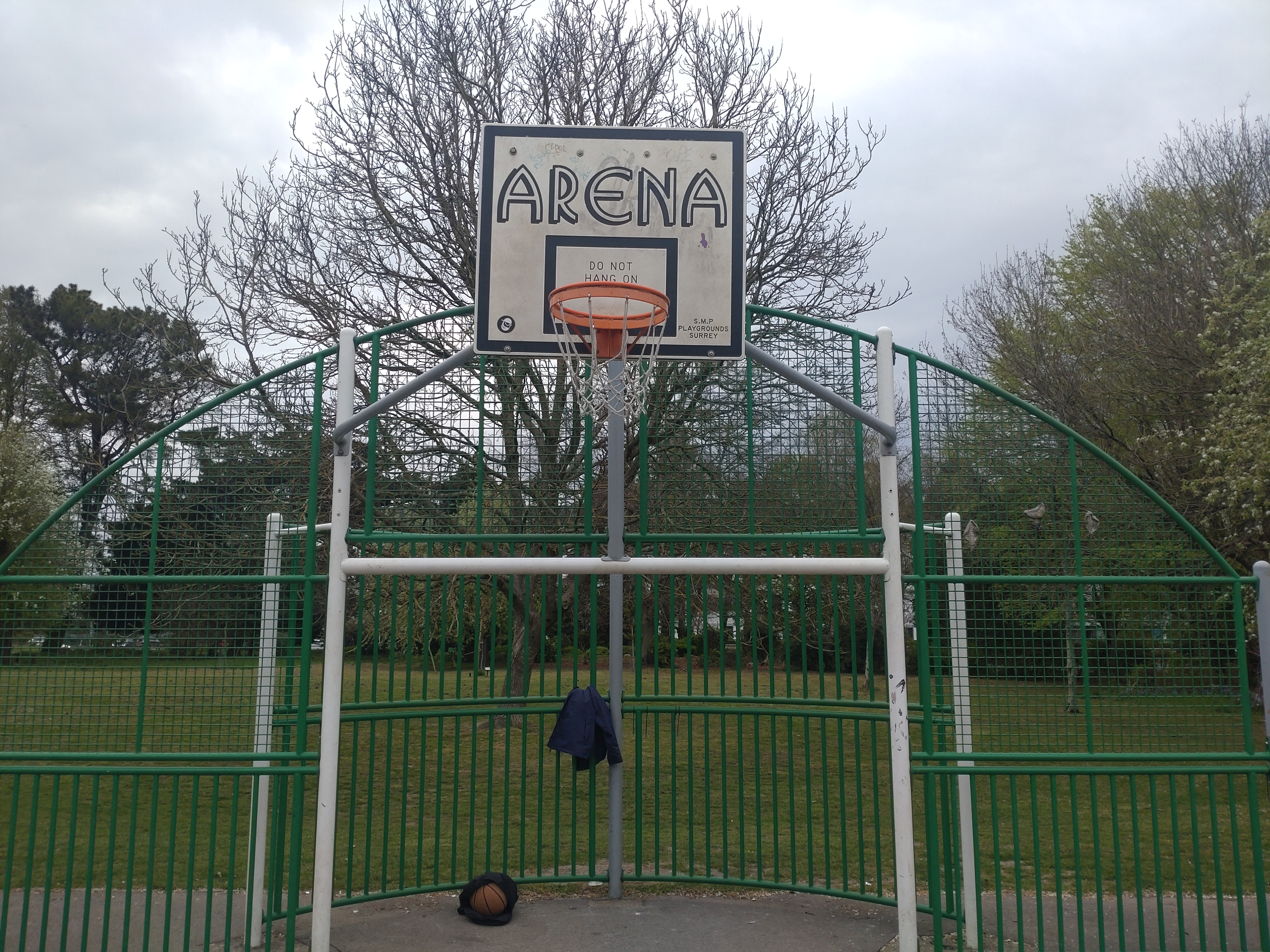
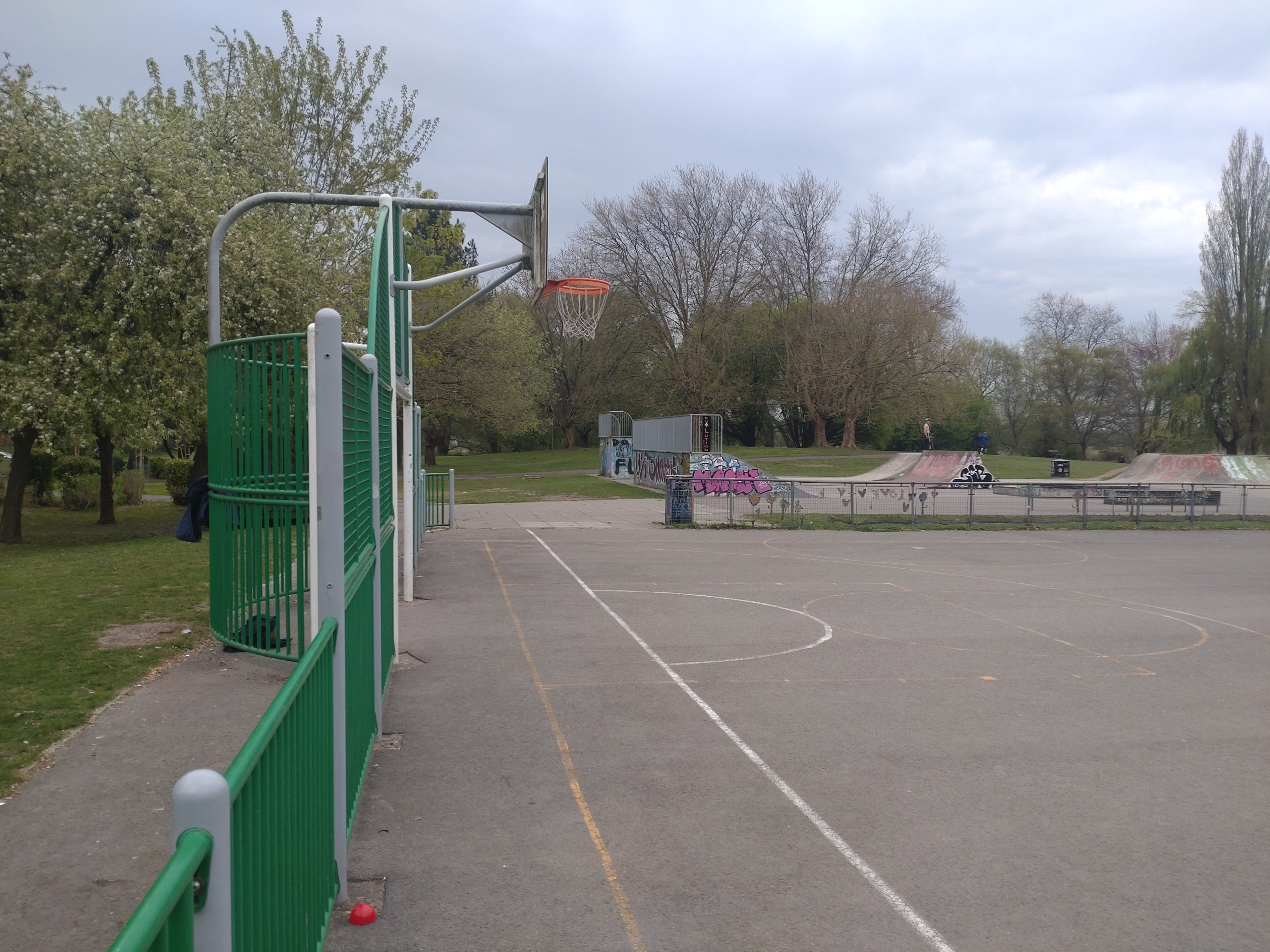
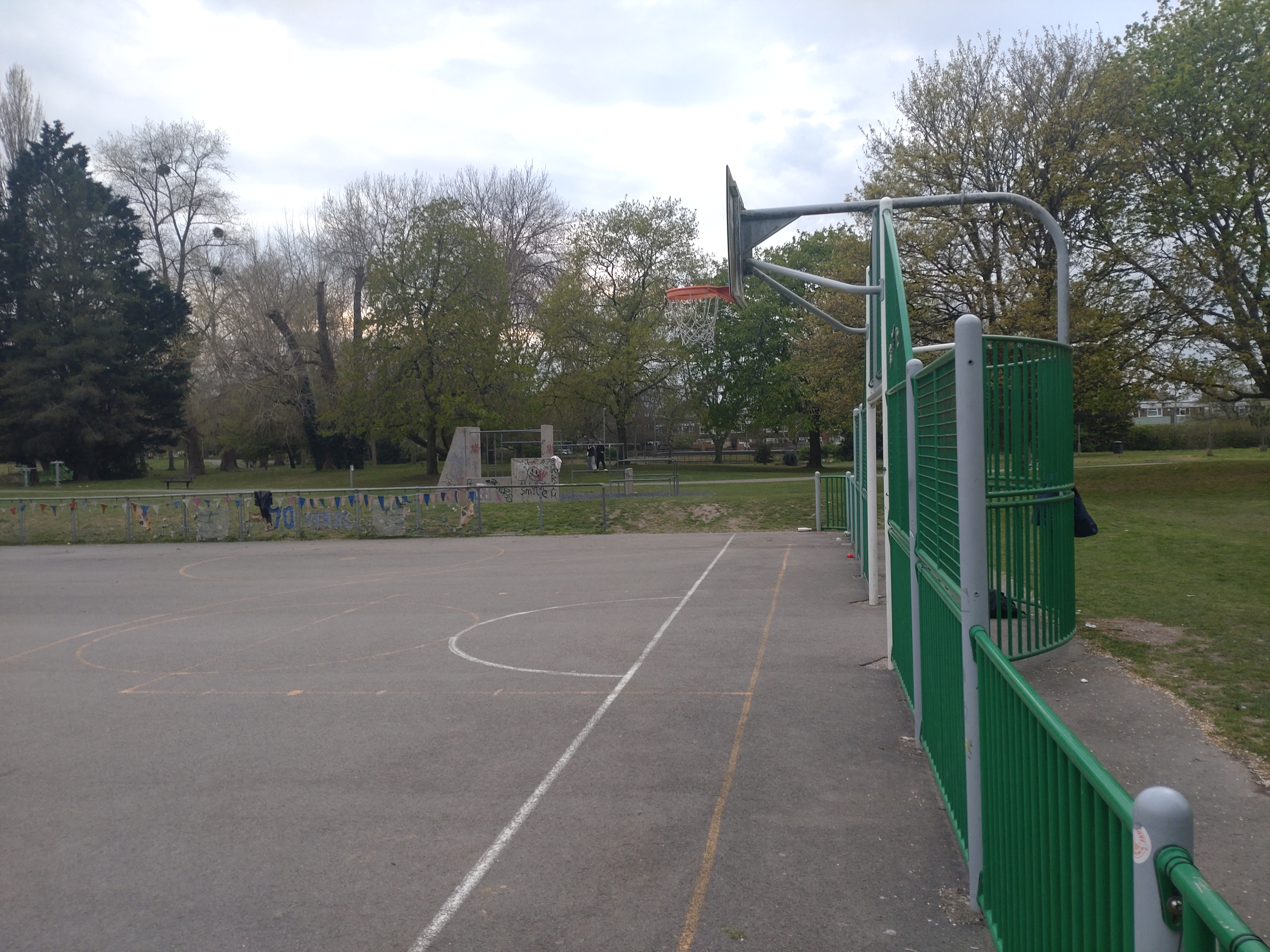
The south side in summer still contains visible dirt and remains slippery from past flooding.
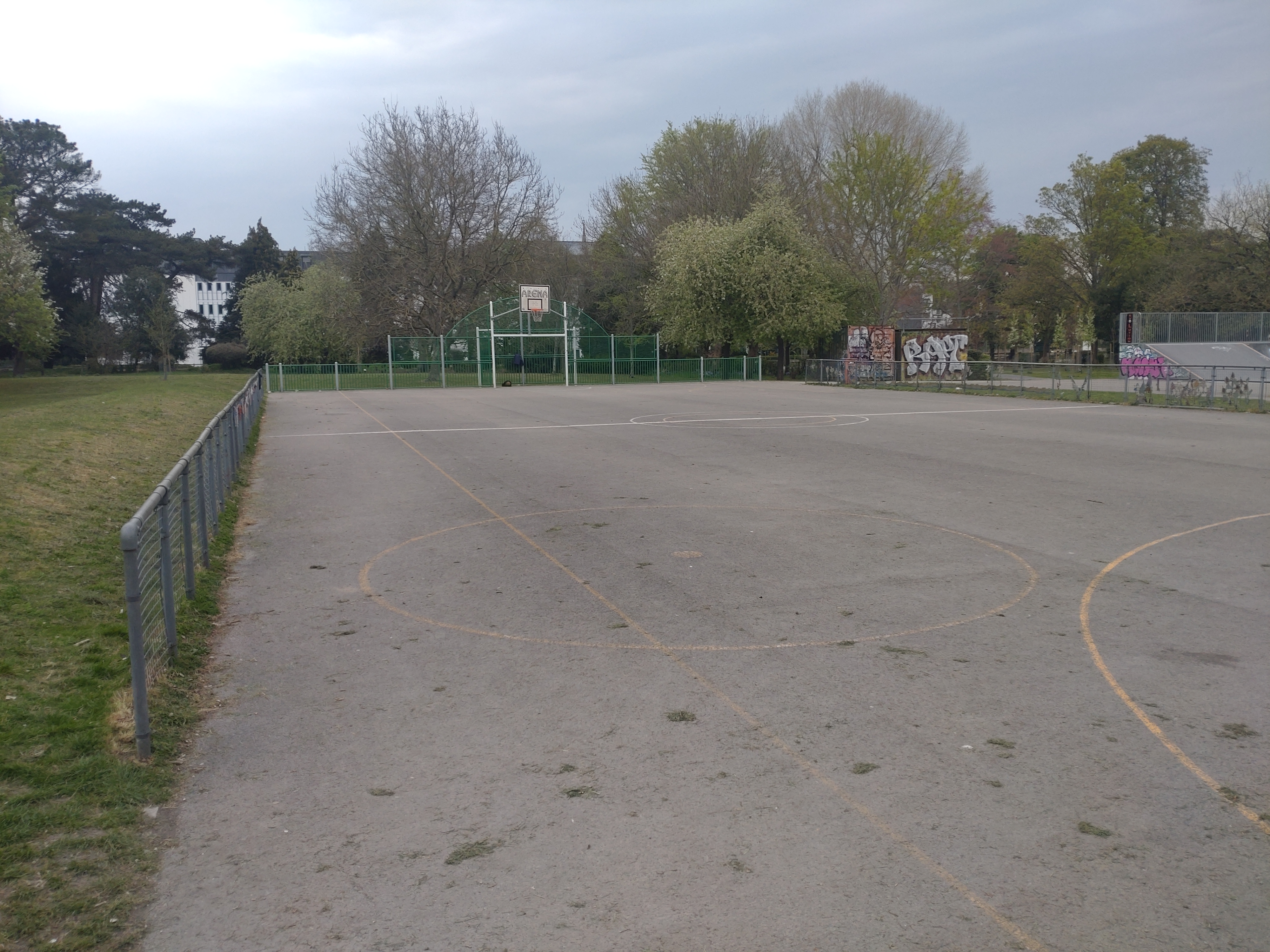
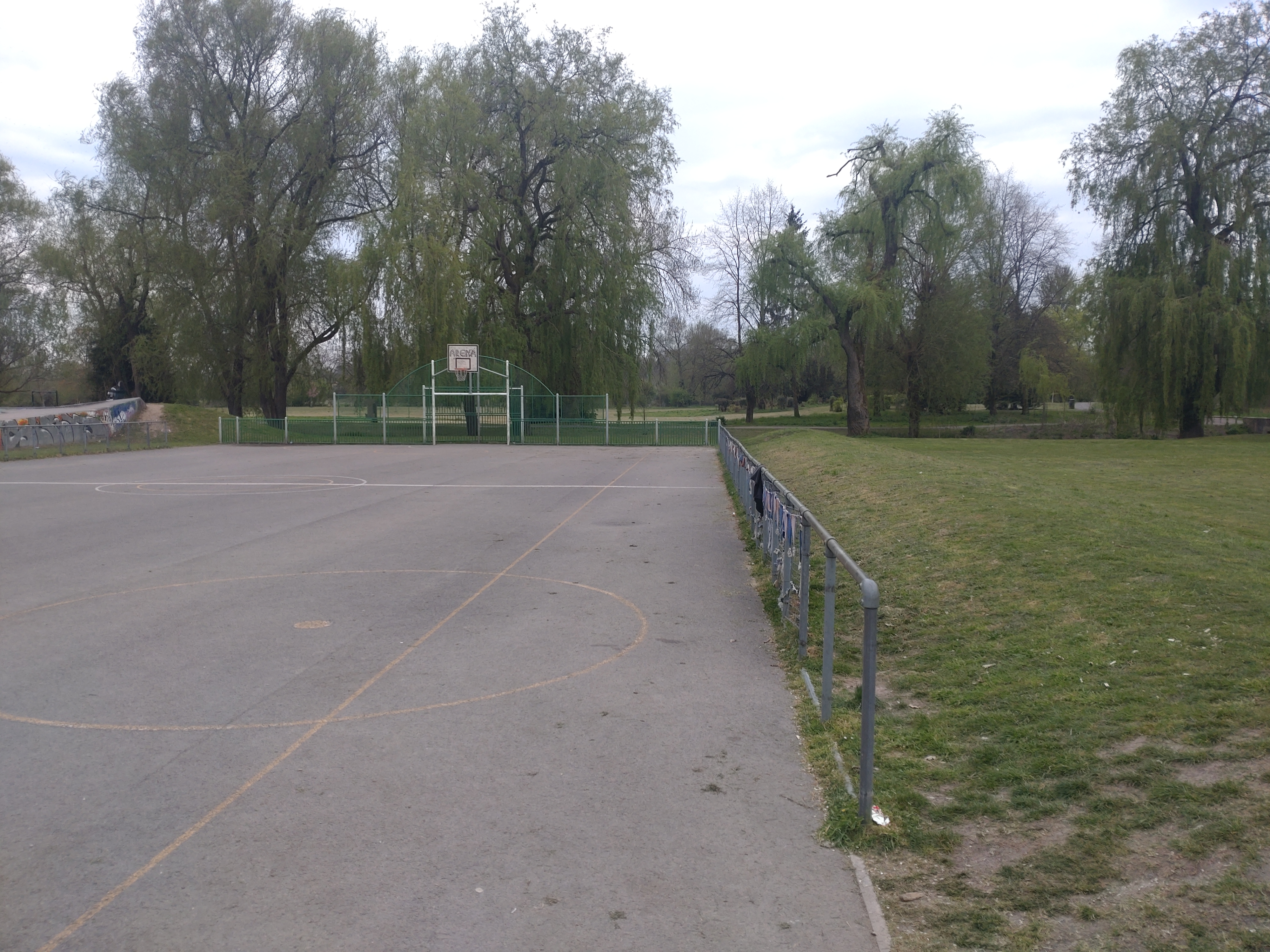
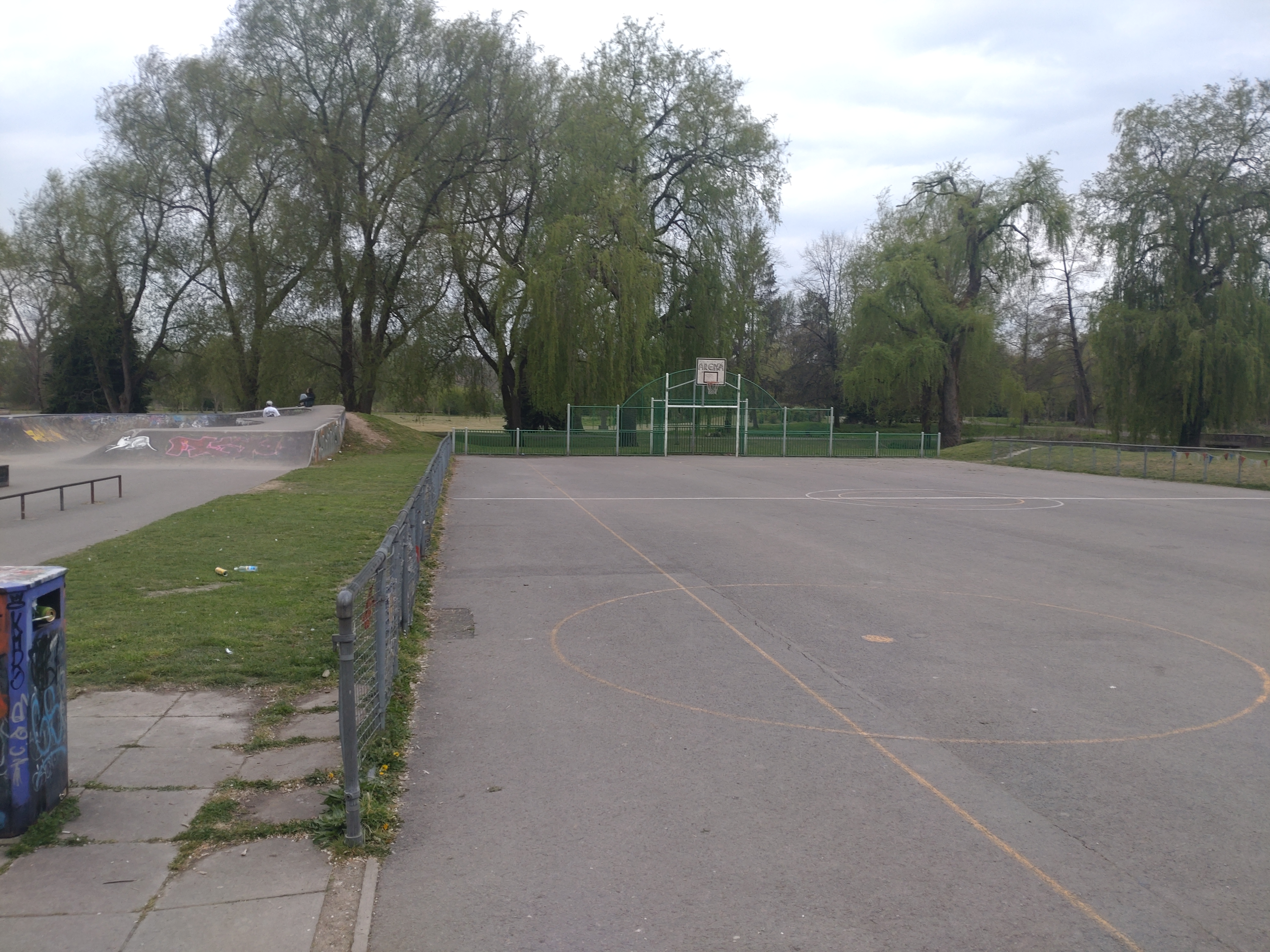
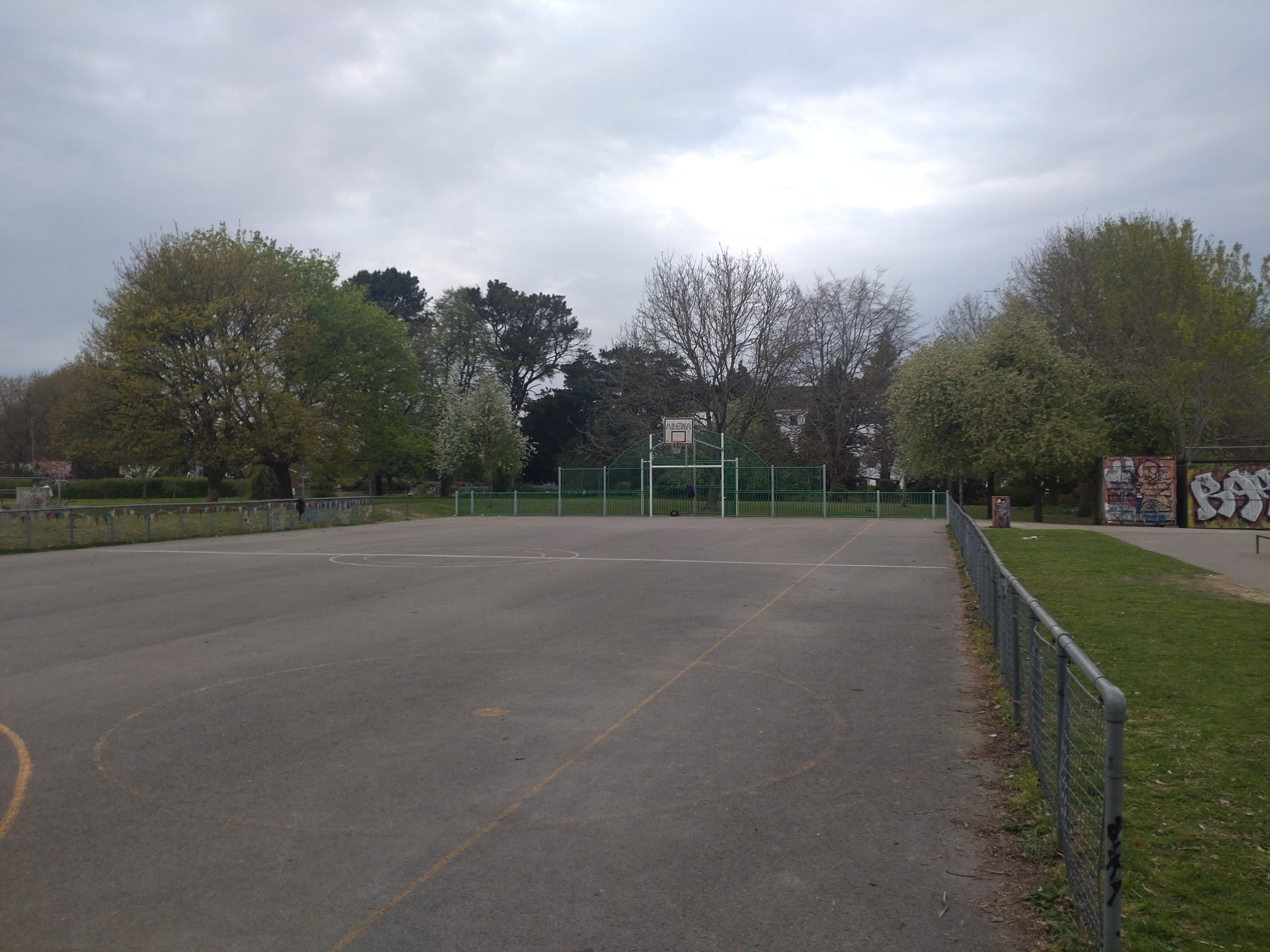
The south side of the basketball court suffers from persistent seasonal flooding that can last for several months at a time, often making the surface completely unusable throughout autumn, winter, and early spring. Because the current ground has no effective drainage system, rainwater collects into large puddles that remain for extended periods compared to the north side.
Even after the water evaporates, the court surface is left with a build-up of mud, dirt, and organic residue that stays visible from April through August. This dried residue creates a thin, uneven film that becomes extremely slippery once players begin running or changing direction, turning the tarmac into a hazardous playing surface.
The situation is deceiving, as the court can look dry to the eye, yet still behave like a low-traction slip surface under fast movement, sharp turns, or rapid stops. Multiple players, especially children and teenagers, have reported sliding, loss of grip, and near-falls, greatly increasing the risk of ankle sprains, muscle injuries, and collisions.
The south side also receives very limited sunlight throughout the year, which prevents moisture from drying fully within the surface texture. This ongoing dampness accelerates surface cracking and erosion, meaning the court is not only unsafe now, but continues to degrade faster each season if the issue is left unresolved.
Fixing this flooding problem is essential for restoring safe recreational play, ensuring equal court usage, protecting the river, and creating a secure long-term environment for community sport.
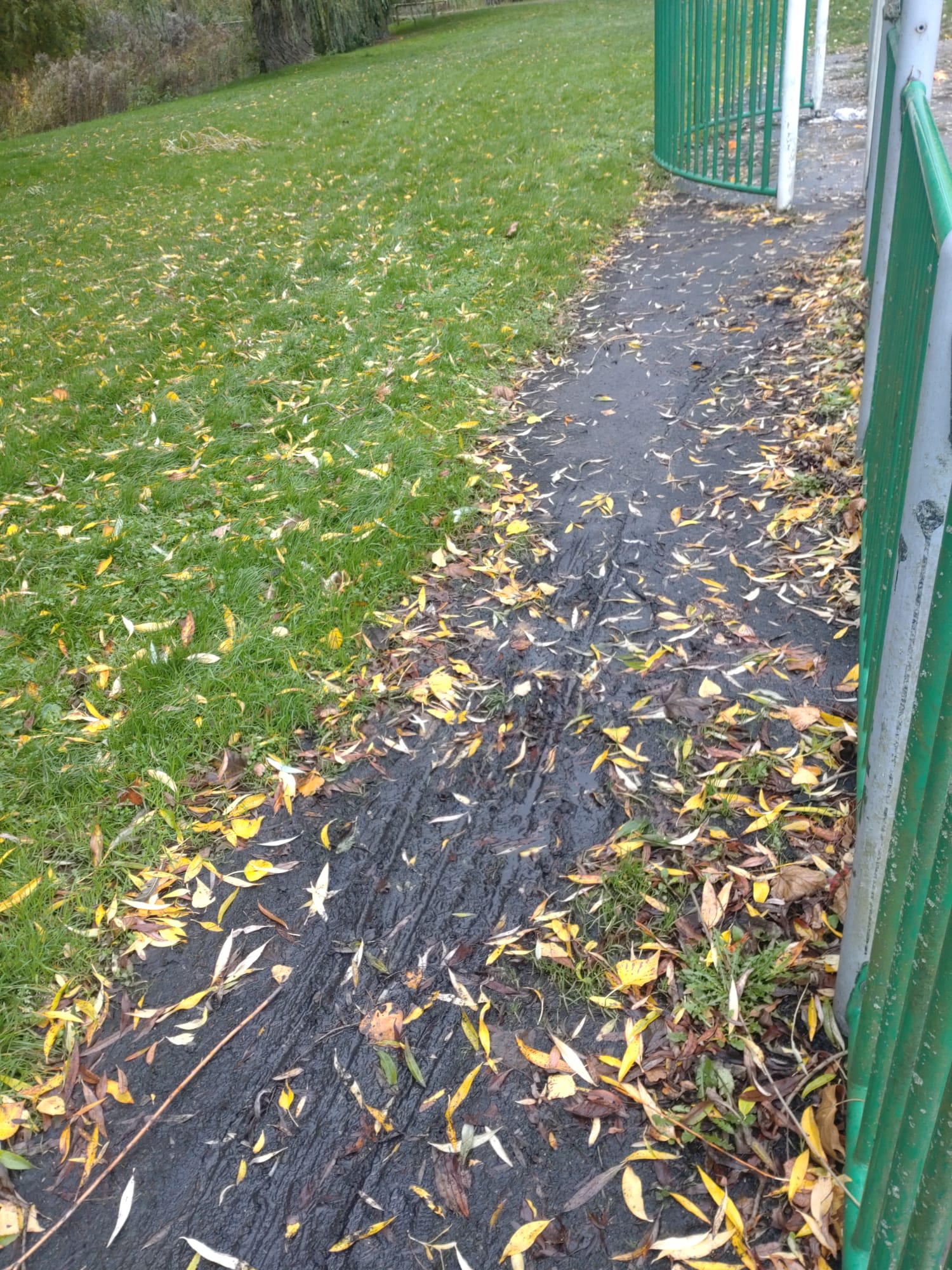
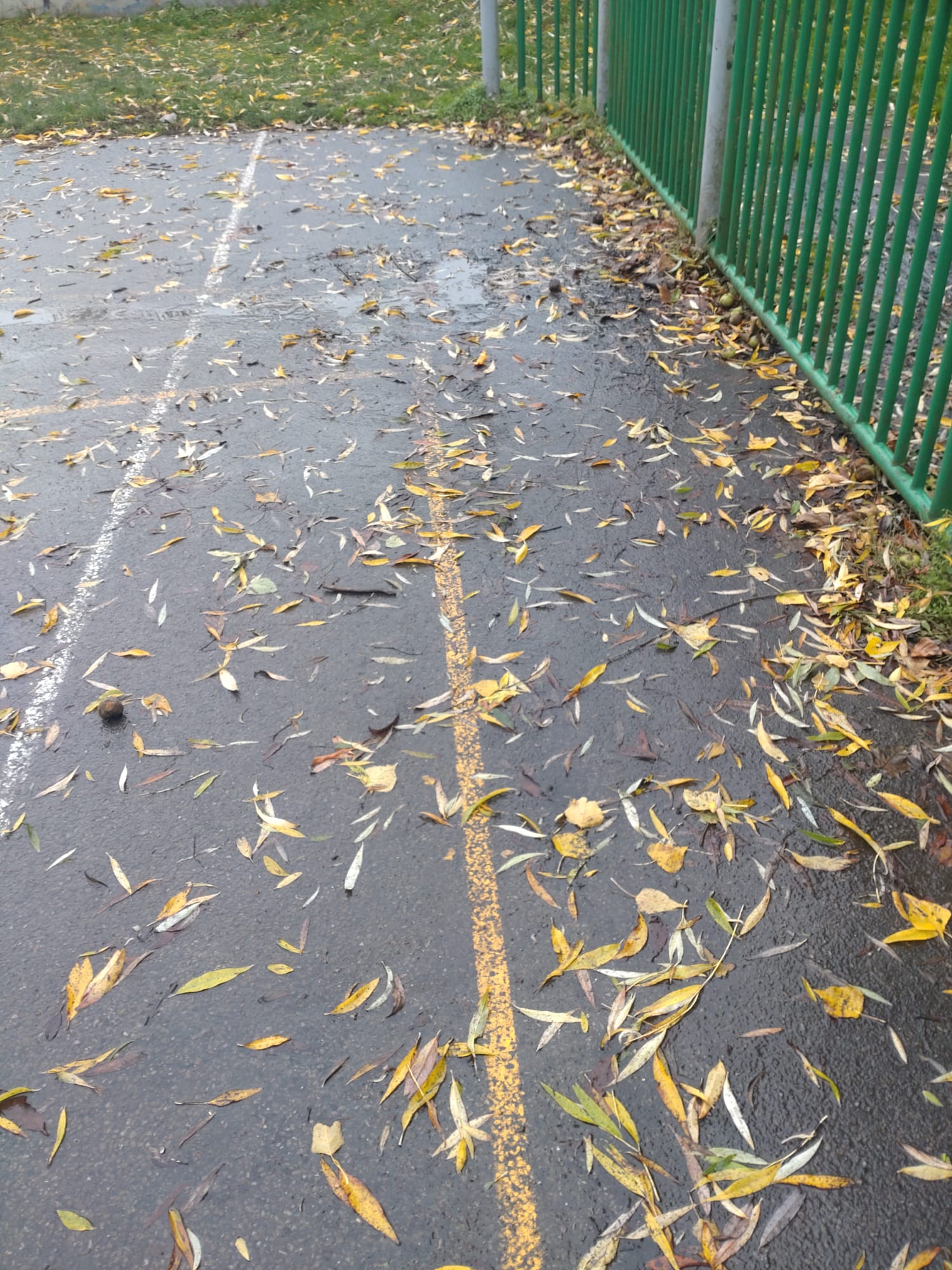
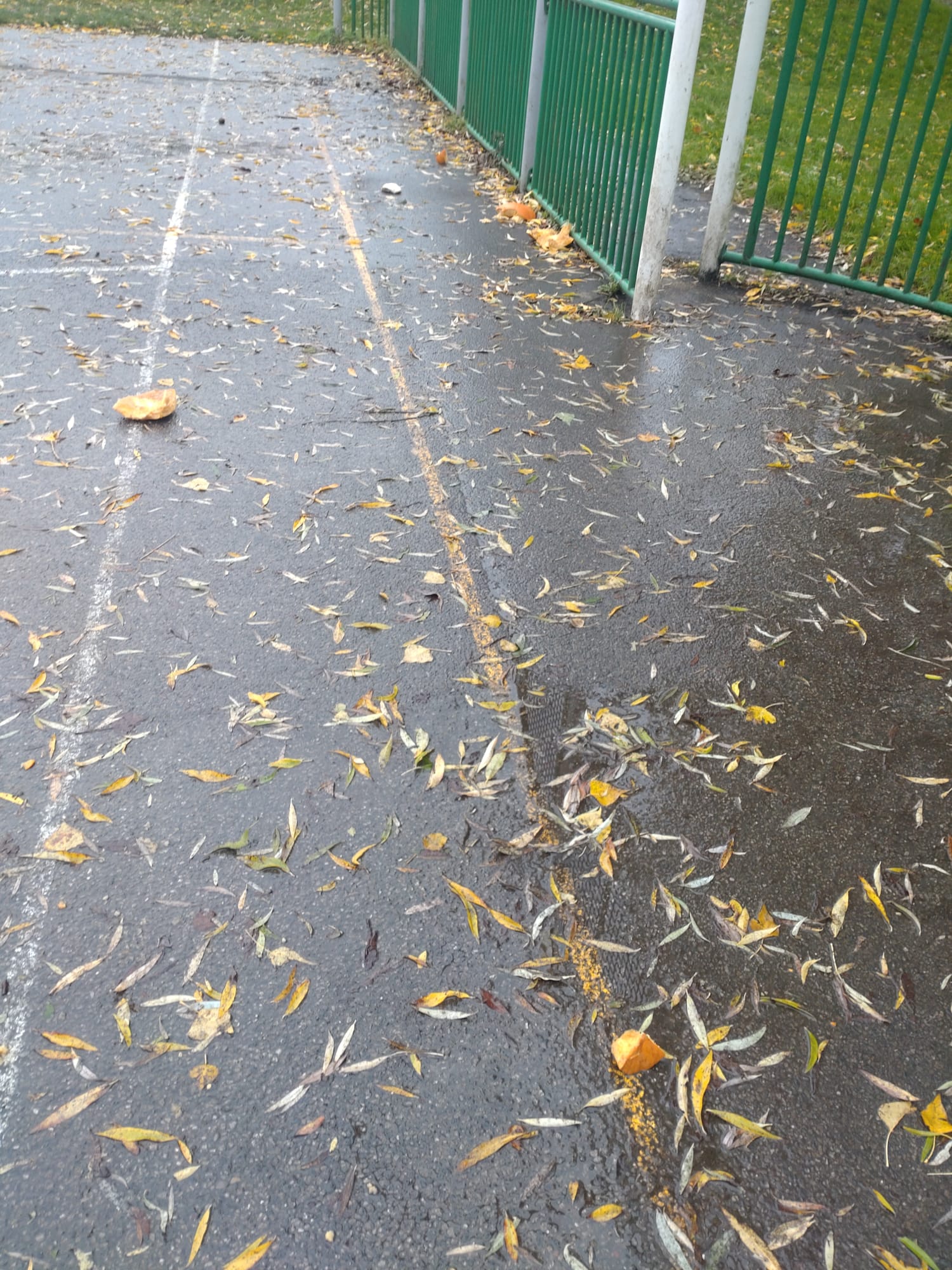
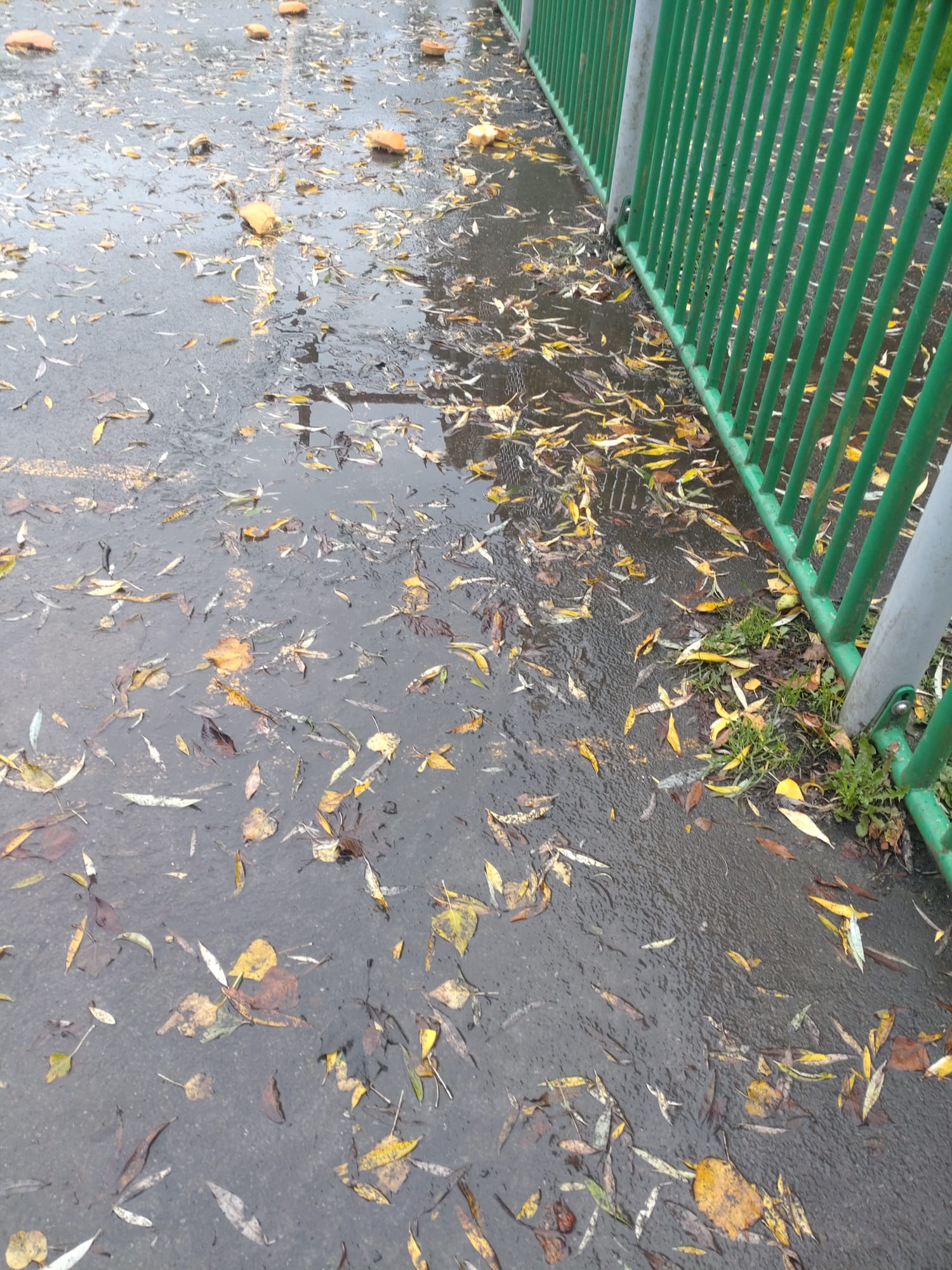
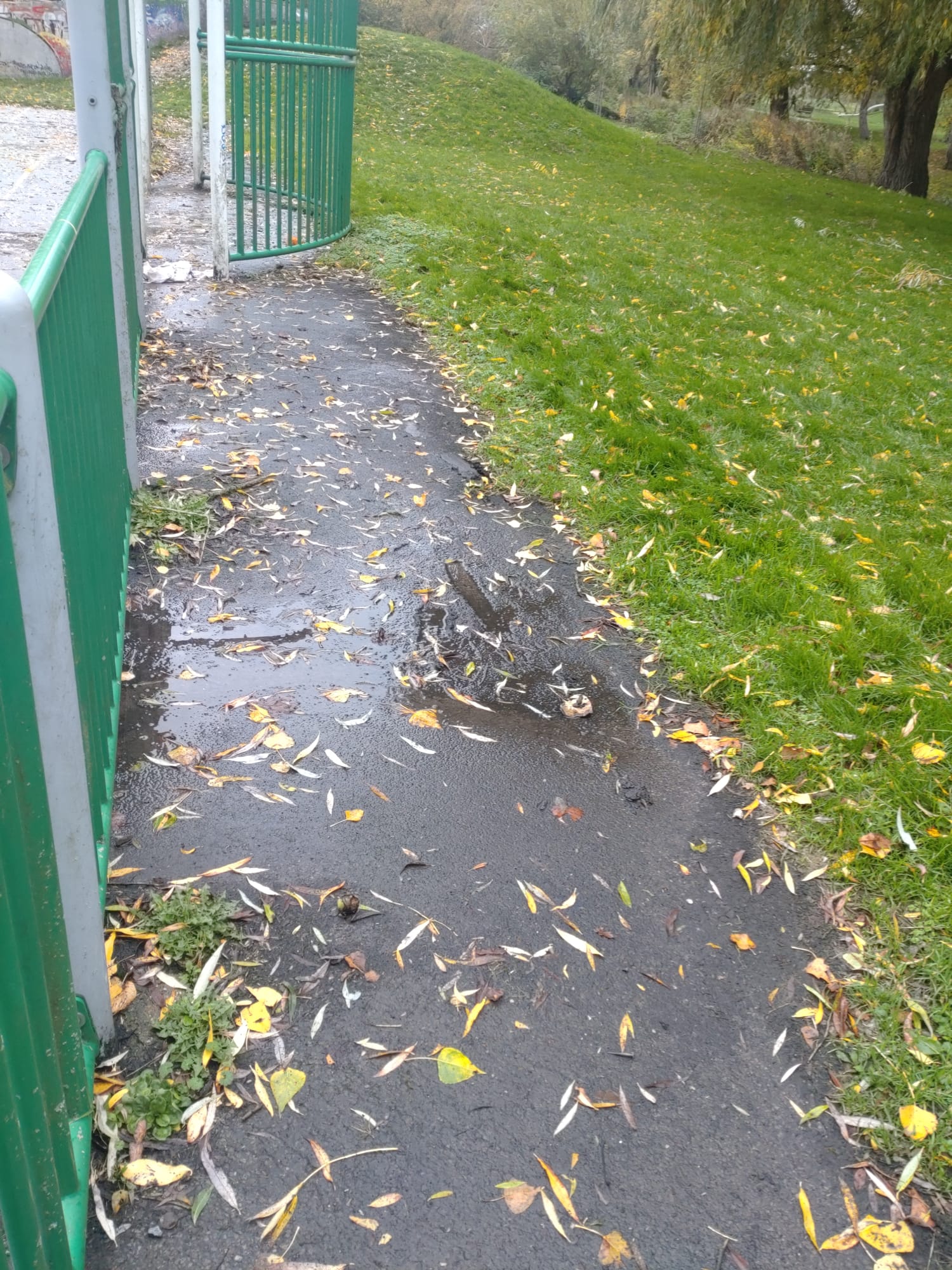
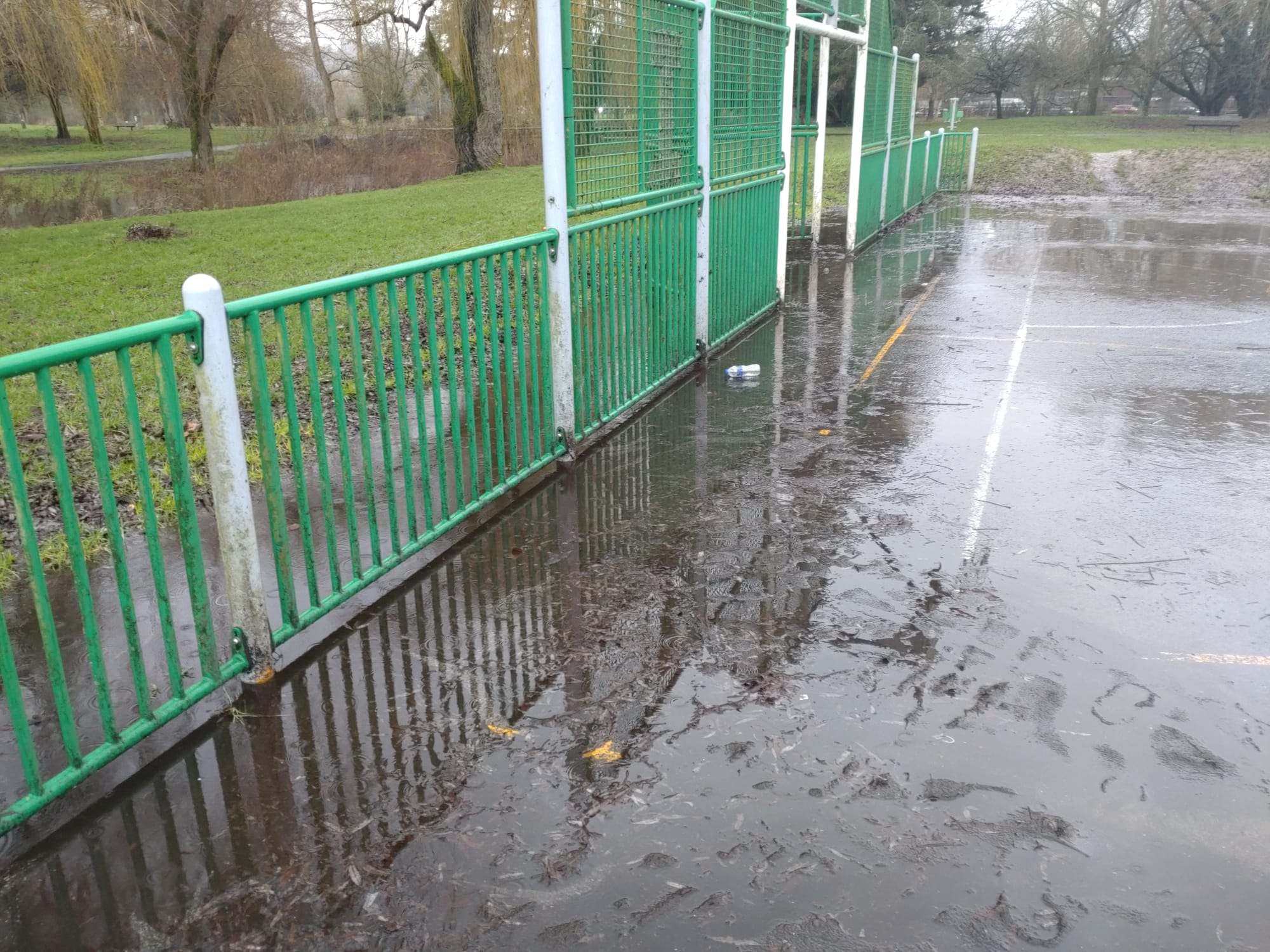
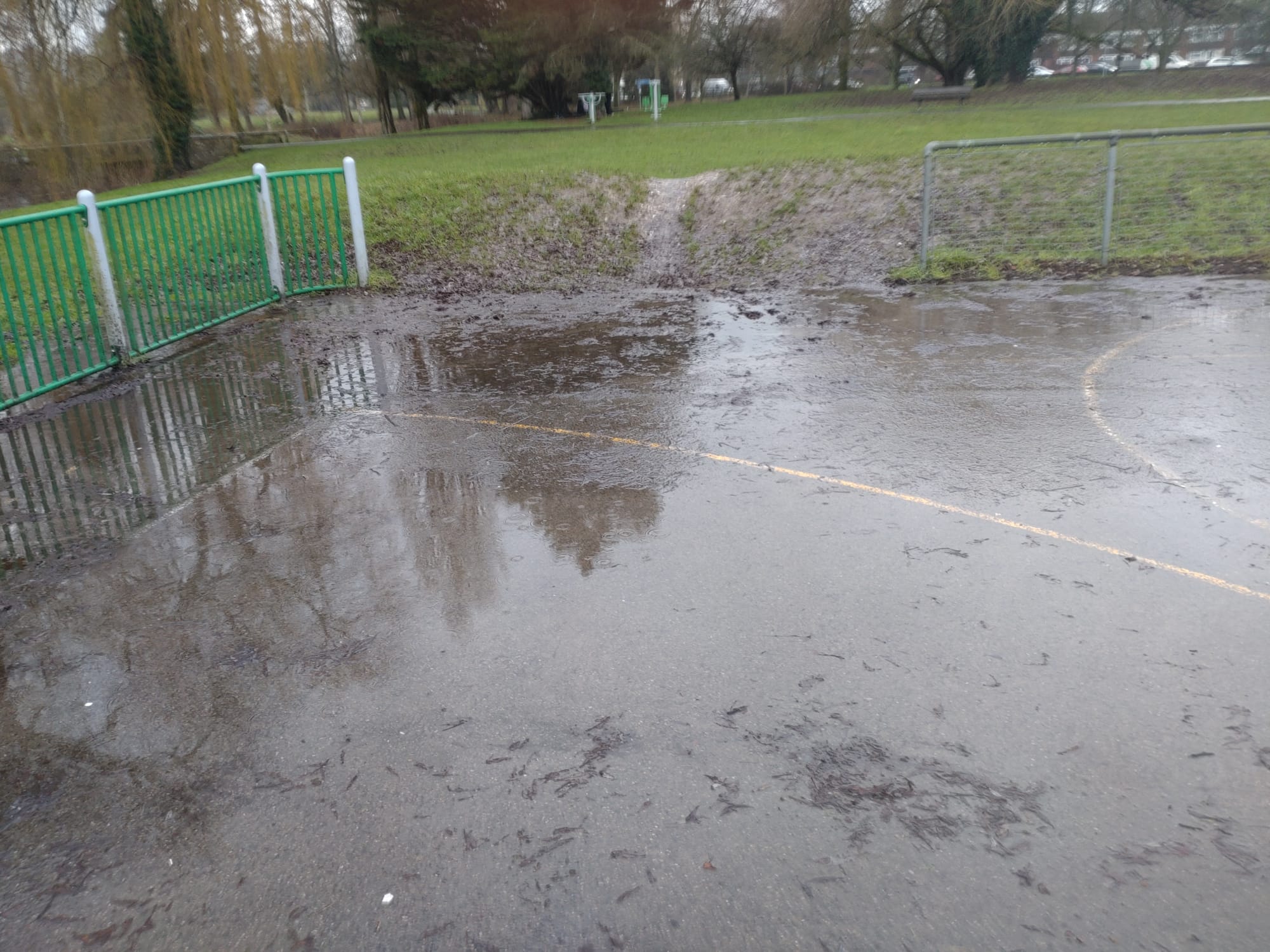
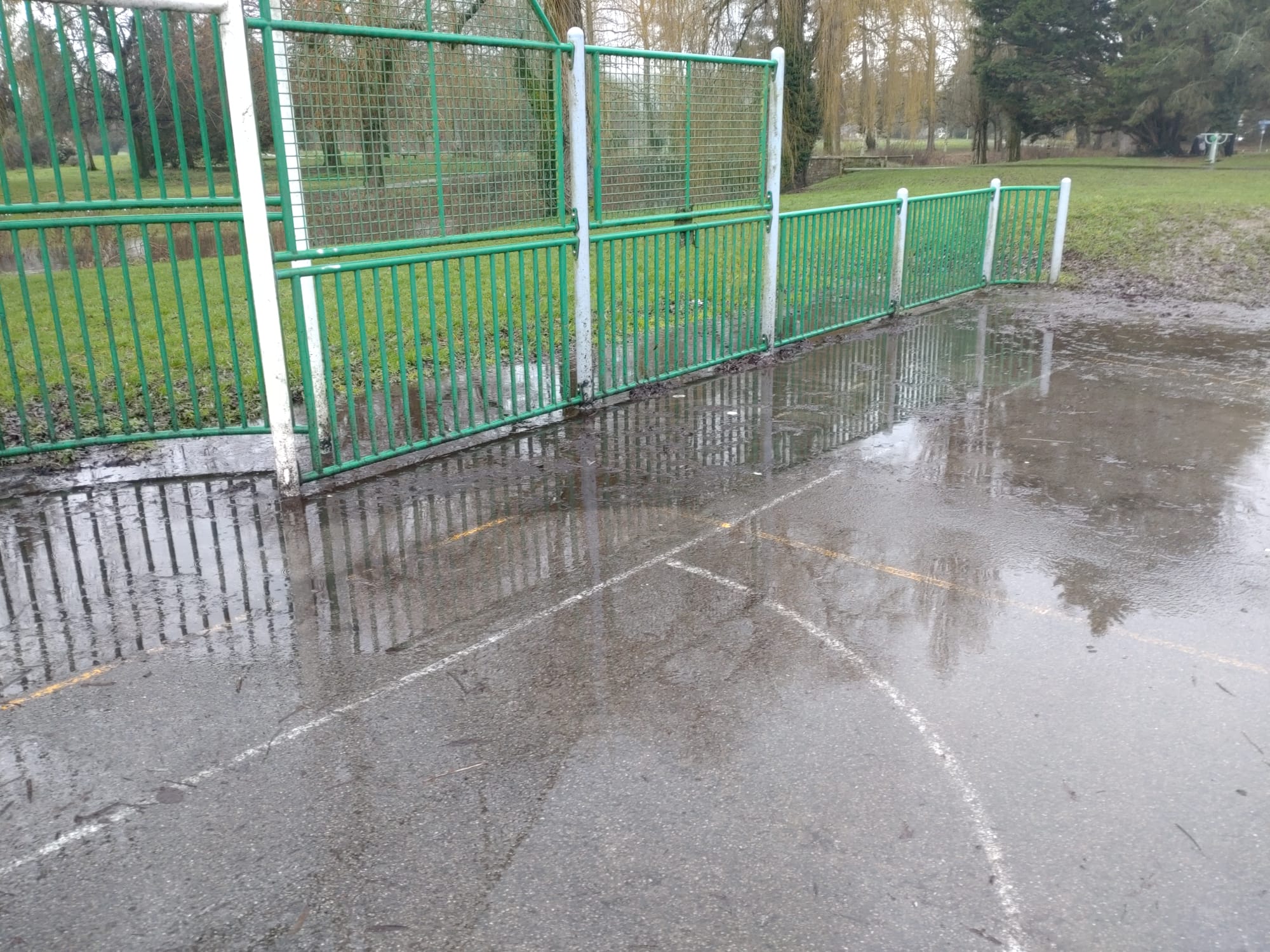
The north side of the court dries significantly faster due to continuous direct sunlight exposure throughout the day, including during the winter months. The south side, however, remains shaded for most of the year due to nearby trees and its riverbank position, causing moisture to remain trapped much longer.
As a result, players are forced to use the north side more frequently while waiting for the south side to dry. This has turned the north half into the primary active sports area for both basketball and football — leading to extremely visible and accelerated wear and tear.
Cracks in the tarmac, uneven surfaces, and fading texture now clearly show that heavy repeated use has caused faster deterioration, creating areas that behave like a low-traction surface when active, even with minor moisture.
This demonstrates that although the north side currently drains and dries better, the damage caused by constant overuse is now unavoidable. Without full court resurfacing and improved drainage solutions, the entire court will continue to degrade and eventually become unsafe for the community.